



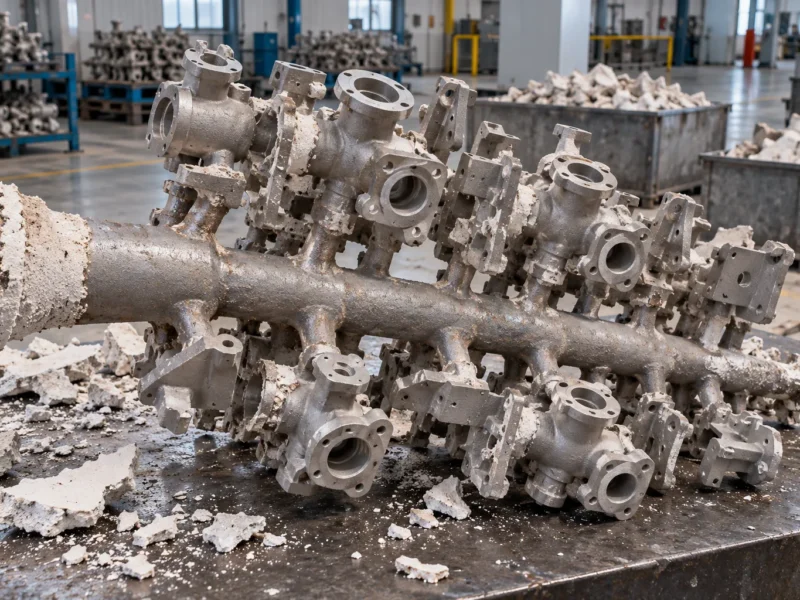
An investment casting is usually quoted as a piece price plus a one-time charge for the wax pattern die. Chinese foundries often build the raw casting price from weight (a price per kilogram for the alloy and shell route) and add machining, heat treatment and finishing per piece. Small, complex parts are usually quoted per piece. The main cost drivers are below.
| Cost driver | Why it matters |
|---|---|
| Alloy | Stainless, nickel-bearing and tool steels cost more per kilogram than carbon steel. |
| Casting weight | More metal, and heavier parts take fewer pieces per tree. |
| Yield | The sprue and gates are remelted, but often less than half the poured metal ends up in the parts, and the melting and shell cost is paid on all of it. |
| Complexity | Cores, thin walls and difficult geometry increase scrap risk and labor. |
| Shell process | Silica sol costs more than water glass. |
| Heat treatment | Solution treatment, quench and temper or aging add a process step. |
| Machining | Often the largest cost after the casting itself. |
| Surface finishing | Polishing, electropolishing and plating add cost. |
| Testing | Radiography, penetrant testing and certificates add cost per lot. |
| Quantity | Setup and tooling are spread over the order and annual volume. |
Tooling cost
The wax pattern die is the main tooling cost. Most dies are aluminum; multi-cavity dies cost more but reduce the piece price in volume. Side cores, loose pieces and soluble cores add to the die price. Machining fixtures and gauges for the finished part are quoted separately where needed.
How to reduce cost
- Choose the least expensive alloy and shell process that meet the requirement; see silica sol vs water glass.
- Specify tight tolerances only where needed and let the rest follow the general casting tolerance.
- Reduce machining by casting features near net shape.
- Combine several fabricated parts into one casting.
- Give the annual volume, not only the first order, so the die and tree layout are planned for it.
Frequently asked questions
Is the wax die a one-time cost?
Usually yes. Dies need occasional maintenance and eventually replacement after long production, which is agreed in the tooling terms.
Why do quotes from different foundries differ so much?
Different assumptions about process, yield, scrap, finishing, inspection and machining. Compare quotes line by line on the same specification.
Have a casting to discuss? Send your drawing or 3D file, the alloy grade and the annual volume through our inquiry form. We review castability and reply with a quotation.