China United Mould

Logo 2021

Water Glass Investment Casting

Water glass process

Water glass casting: an economical route for steel parts

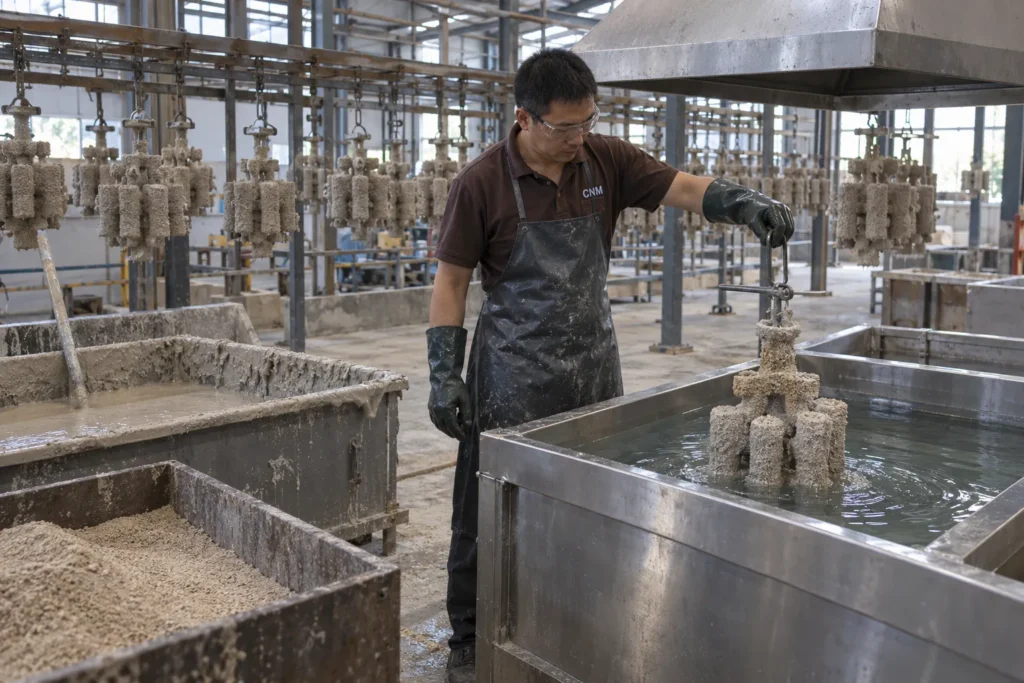
In water glass investment casting the shell is bonded with sodium silicate. Each coat is hardened chemically, typically in an ammonium chloride or aluminum chloride solution, instead of being dried for hours, so a shell of 4–6 coats can be built in about a day. Patterns are usually made from low-temperature wax (paraffin and stearic acid) that is melted out in hot water and reclaimed, and shells are fired at about 850–950 °C.

The shell is cheaper and quicker to make, but the surface is rougher and tolerances are wider than with silica sol. That makes water glass a good fit for carbon and low-alloy steel parts whose functional faces are machined anyway: machinery and agricultural parts, levers, brackets, hardware and construction machinery components. Some foundries use a silica sol face coat with water glass back-up coats to improve the surface at moderate cost.

Water glass shell building: a coated wax tree lowered into the hardening tank
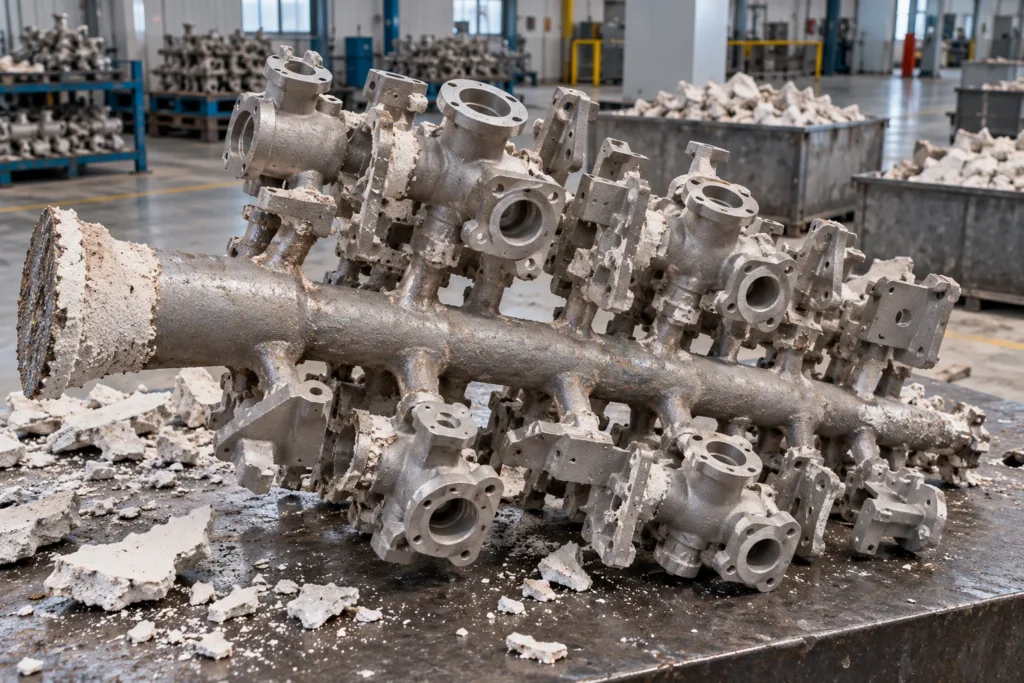
Steel valve body castings still on the sprue after shell knockout

Where water glass casting fits best

Water glass casting at a glance (typical)

Shell binderSodium silicate (water glass)
Coats and hardeningTypically 4–6 coats, each hardened in ammonium chloride or aluminum chloride solution
RefractoriesQuartz or zircon face coat; quartz, chamotte or mullite back-up sand
Pattern wax / dewaxLow-temperature wax (paraffin and stearic acid); hot-water dewaxing at about 90–95 °C
Shell firingTypically about 850–950 °C
Surface finishTypically Ra 6.3–12.5 µm as-cast
ToleranceTypically ISO 8062-3 DCTG 7–9
Common alloysCarbon steels and low-alloy steels

Water glass casting FAQ

When should I choose water glass instead of silica sol?

When the part is carbon or low-alloy steel, the functional surfaces will be machined anyway, and cost matters more than the as-cast finish.

Can stainless steel be cast by the water glass process?

It is possible, but stainless parts are usually cast in silica sol. Water glass shells give a rougher surface and more surface pitting on stainless, which then needs extra grinding or polishing.


Have a casting in mind? Send us your drawing for a quotation.