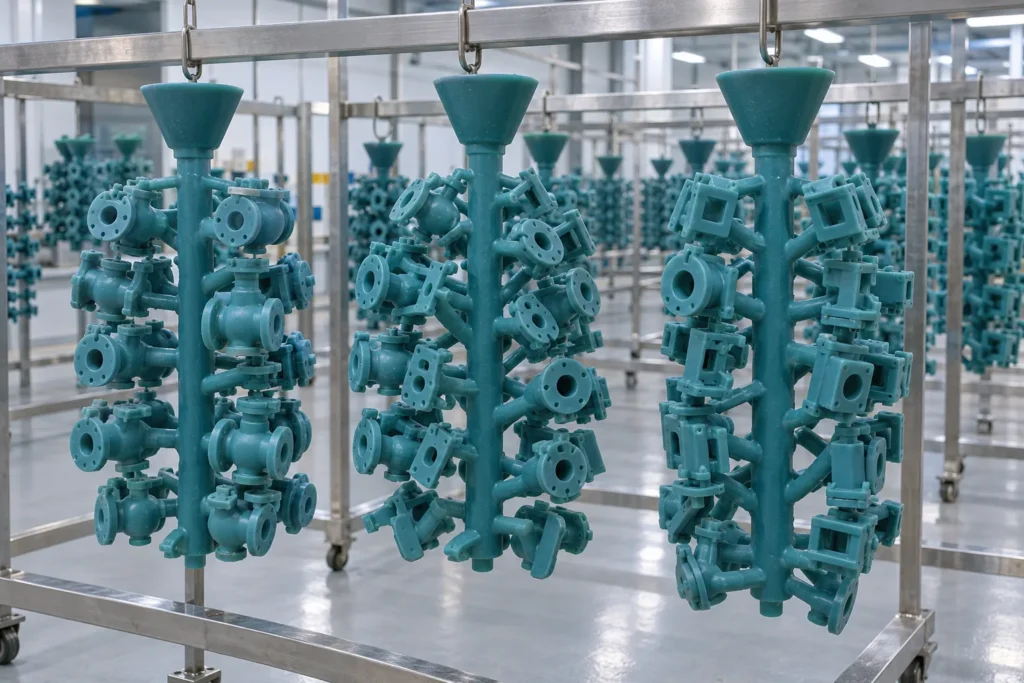
What is the difference between investment casting and die casting?
Investment casting pours metal into a one-time ceramic shell made from a wax pattern and suits steels and stainless steels; die casting injects molten aluminum, zinc or magnesium into a permanent steel die and suits high volumes of non-ferrous parts.
What is the difference between silica sol and water glass casting?
Silica sol shells give smoother surfaces and tighter tolerances and are used for stainless and precision parts. Water glass shells cost less and suit carbon and low-alloy steel parts that are machined on their functional faces. We quote both routes where either could work and recommend the one that fits the part.
What tolerances can investment casting hold?
Typically ISO 8062-3 DCTG 4–6 for silica sol castings and DCTG 7–9 for water glass, depending on size and geometry. Tighter tolerances on critical features are machined.
Which alloys can you supply?
Stainless steels (304/CF8, 316/CF8M, 17-4PH, duplex, martensitic), carbon steels and low-alloy steels are the most common. Tell us the grade and standard on your drawing and we confirm it with the quotation.
Do I need to pay for tooling?
Most castings need a wax pattern die, which is quoted separately from the piece price. For prototypes, 3D printed patterns can be cast without a die.
Can you machine the castings?
Yes. We supply castings as-cast or heat treated, machined and finished to your drawing.
What surface finishes are available?
Shot or sand blasting, passivation, polishing, electropolishing, plating, painting and powder coating.
What information do you need for a quote?
A 2D drawing with tolerances, a 3D model, the alloy grade and standard, heat treatment, order quantity and annual volume, machined faces, surface finish and any testing or certificates required.
How are castings packed for export?
Castings are cleaned, protected against corrosion where needed and packed in cartons, crates or on pallets to your specification.
Where are you located?
China United Mould has plants in Huizhou and Dongguan, Guangdong, China.