China United Mould

Logo 2021

Investment Casting

Lost-wax casting

Precision investment casting for complex metal parts

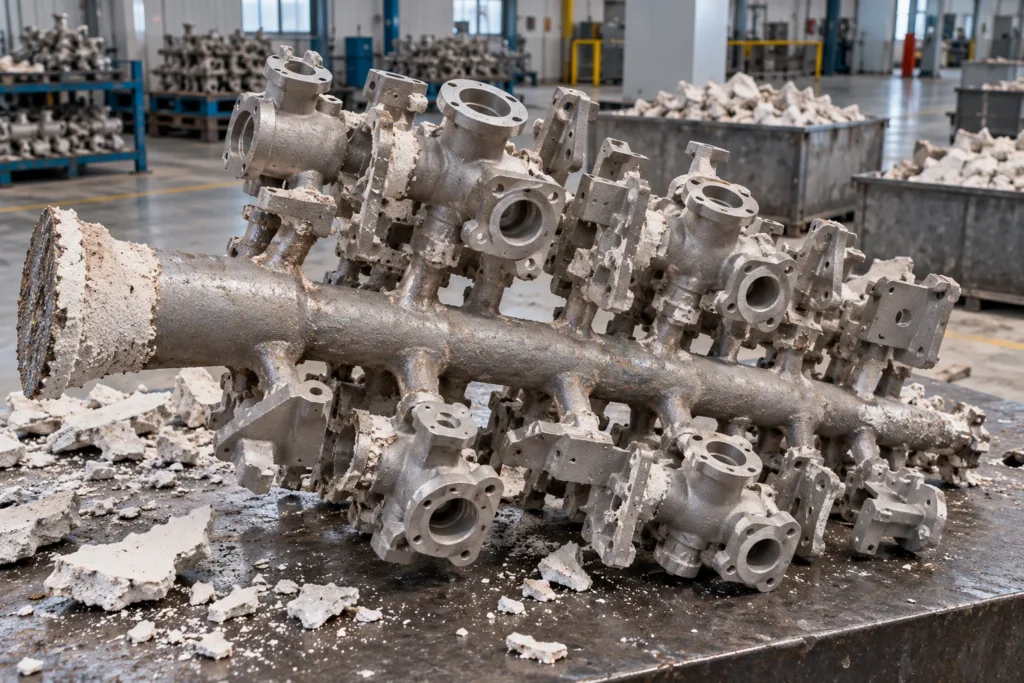
Investment casting, also called lost-wax or precision casting, reproduces a wax pattern in metal. Wax patterns are injected in a metal die, assembled into a tree and dipped in ceramic slurry and sand, coat by coat, to build a shell. The wax is melted out, the shell is fired, and molten metal is poured into the hot shell. After cooling the shell is knocked off and the castings are cut from the tree.

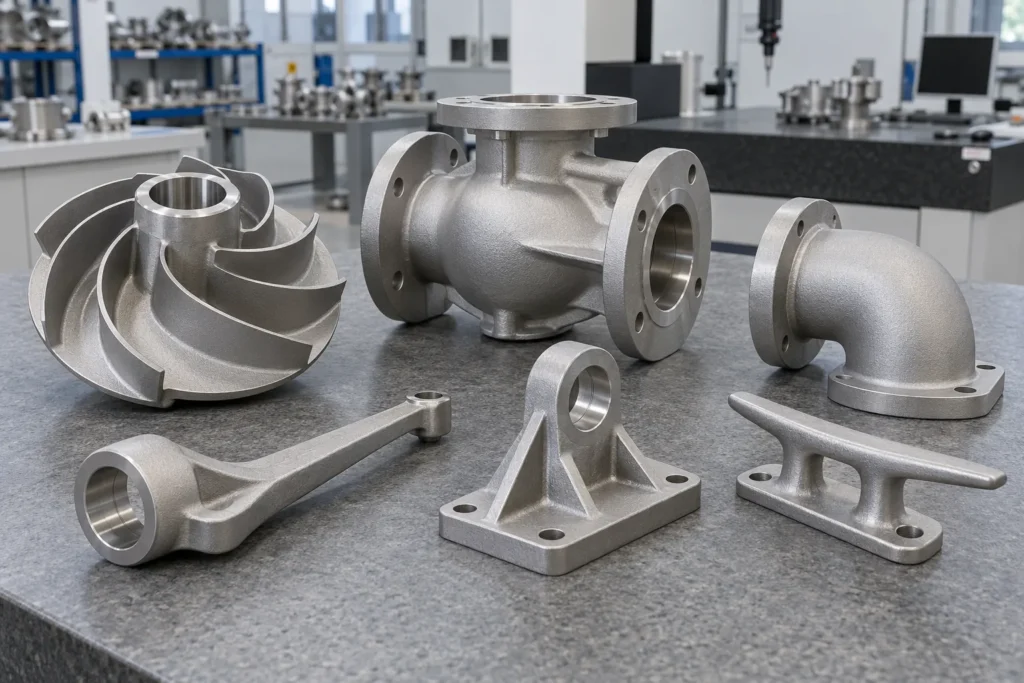
The result is a near-net-shape part with fine detail, thin walls and a smooth as-cast surface, in stainless, carbon or alloy steel. Usually only bores, threads, sealing faces and datums need machining. Typical annual volumes run from a few hundred to tens of thousands of pieces; prototypes can be cast from 3D printed patterns before the die is made.

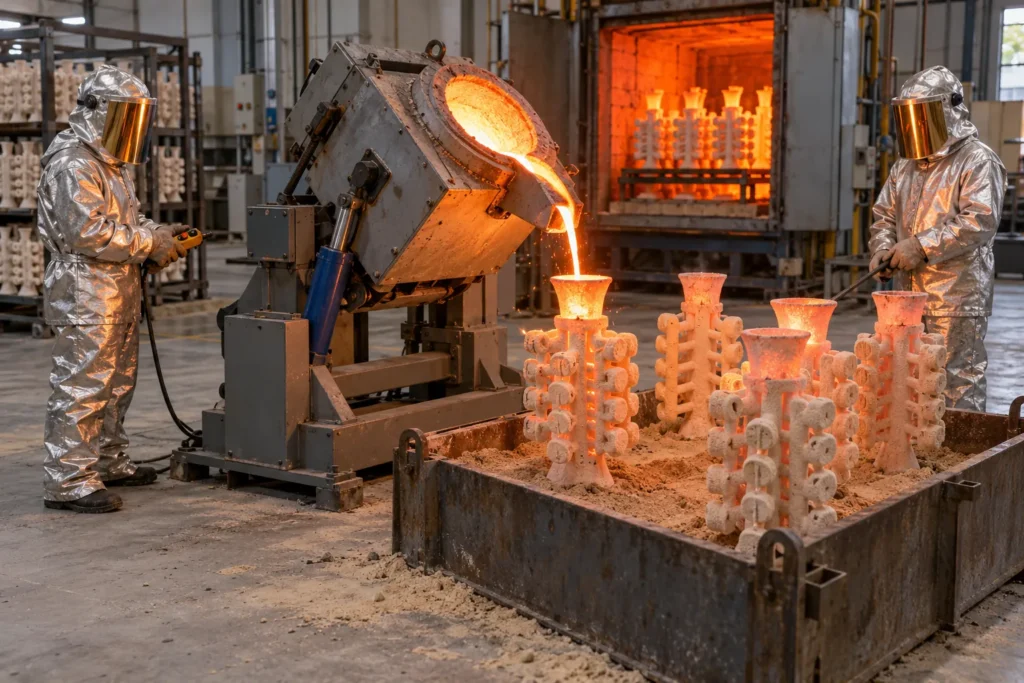
Molten steel poured from a tilting induction furnace into preheated ceramic shells set in sand

The lost-wax process in eight steps

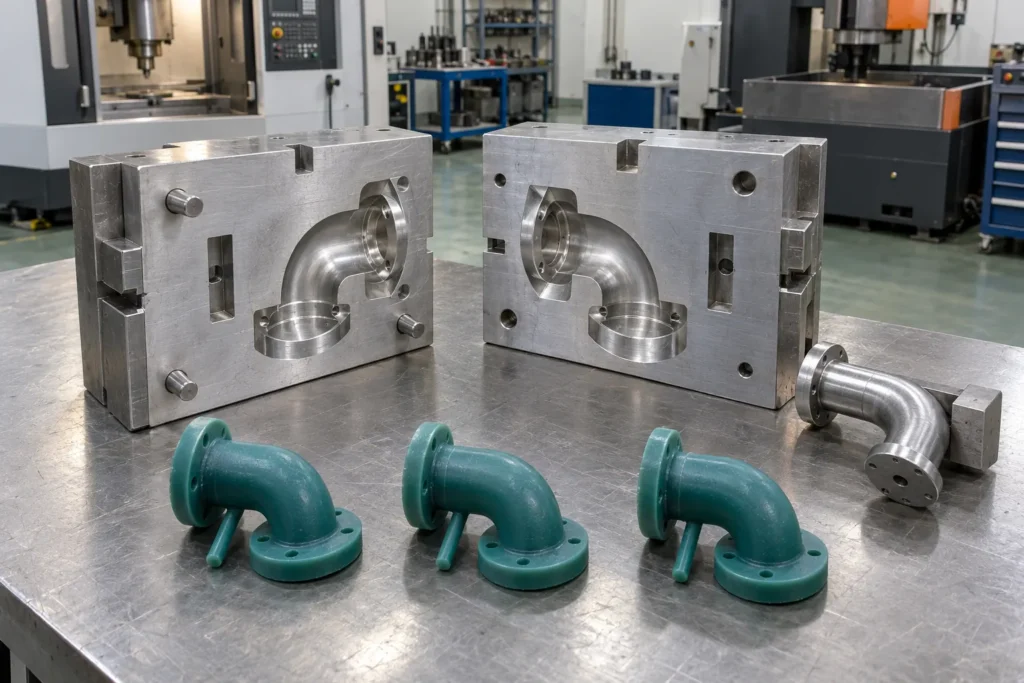
1. Wax injectionPattern wax is injected into an aluminum or steel die. The cavity is oversized by the wax and metal shrinkage, typically about 1.5–2.5% for steel.
2. Tree assemblyPatterns are welded by their gates to a wax sprue with a pouring cup to form a cluster, or “tree”.
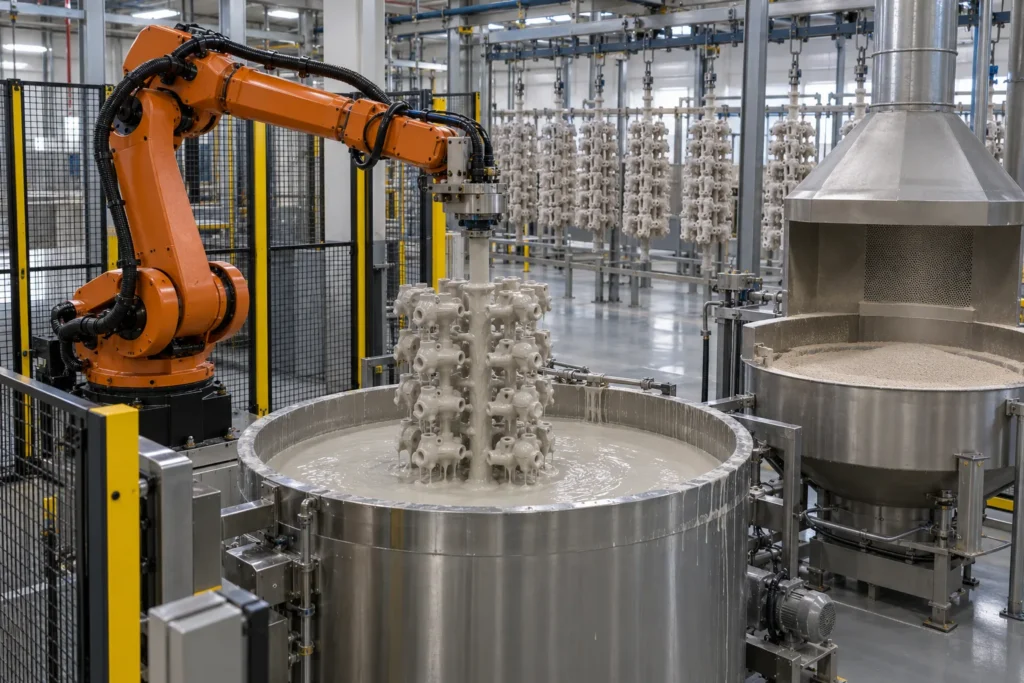
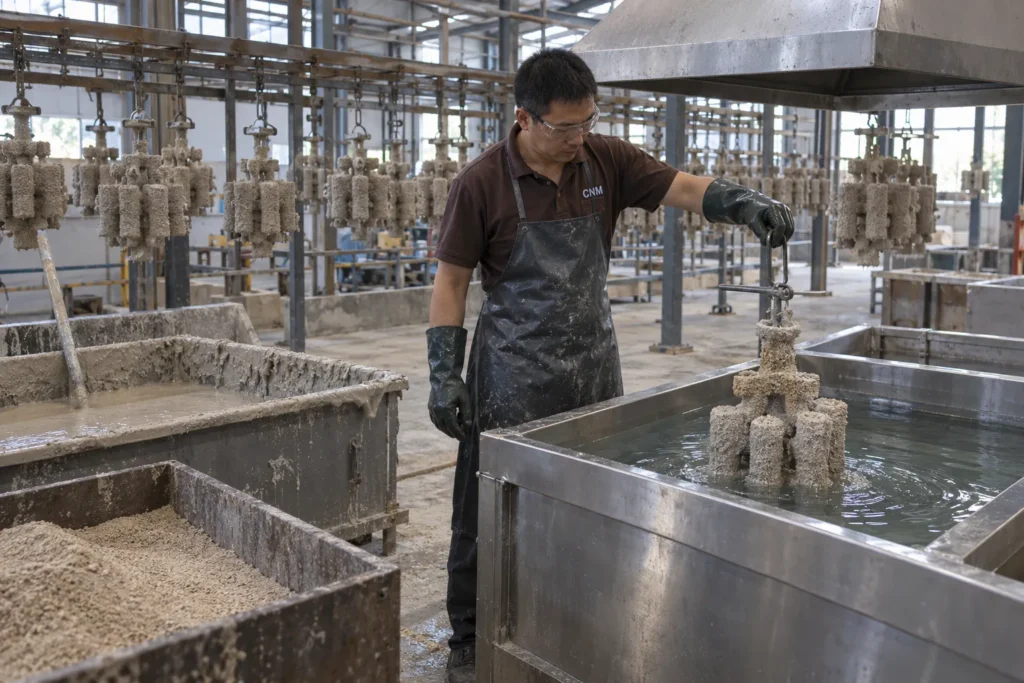
3. Shell buildingThe tree is dipped in ceramic slurry and stuccoed with refractory sand. Face coats use fine zircon; back-up coats use coarser sand. Typically 5–7 coats for silica sol and 4–6 for water glass, each dried or hardened before the next.
4. DewaxingSilica sol shells are typically dewaxed in a steam autoclave; water glass shells in hot water at about 90–95 °C. The wax is reclaimed.
5. FiringThe shell is fired to burn out wax residue and gain strength, typically at about 1,000–1,100 °C for silica sol and 850–950 °C for water glass, and is poured while still hot.
6. PouringMetal melted in an induction furnace is poured by gravity into the preheated shell.
7. Knockout and cut-offAfter cooling the shell is knocked off by vibration or hammer, and the castings are cut from the sprue with an abrasive wheel or saw.
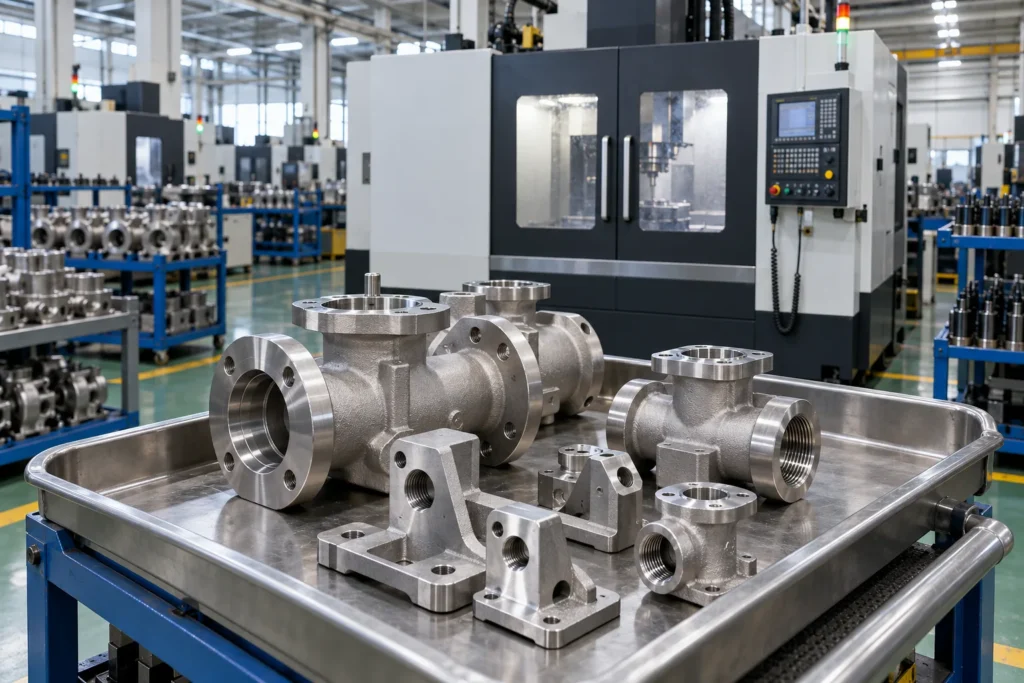
8. Finishing and inspectionGate grinding, shot blasting, heat treatment, straightening where needed, machining and inspection to the drawing.

Silica sol shells for the best surface finish and dimensional accuracy.

Sodium silicate shells for economical carbon and low-alloy steel castings.

304, 316, 17-4PH, duplex and martensitic stainless steel castings.

Carbon steel and low-alloy steel investment castings, heat treated for strength.

Aluminum and steel wax injection dies made in our own tool room.

CNC machining, heat treatment and surface finishing of investment castings to your drawing.

Investment casting at a glance (typical)

ProcessLost-wax investment casting (silica sol or water glass shell)
Typical part weightA few grams to a few kilograms for most parts; heavier parts are possible, more often by water glass
Minimum wallTypically about 1.5–2 mm for small steel parts in silica sol; thicker for long flow lengths and for water glass
Dimensional toleranceTypically ISO 8062-3 DCTG 4–6 for silica sol, DCTG 7–9 for water glass
As-cast surfaceTypically Ra 3.2–6.3 µm for silica sol (about 1.6 µm on favorable faces); Ra 6.3–12.5 µm for water glass
Machining allowanceTypically about 0.5–1.5 mm on silica sol castings, more on water glass
MaterialsStainless, carbon, alloy and tool steels
Secondary operationsHeat treatment, machining, blasting, passivation, polishing, plating

Investment casting FAQ

What is investment casting?

A casting process in which a wax pattern is coated with ceramic to form a shell, the wax is melted out, and molten metal is poured into the hot shell. It is also called lost-wax or precision casting.

Why choose investment casting over machining from solid?

For complex shapes in volume, a near-net-shape casting saves most of the material and machining time. Only the features with tight tolerances are machined. For a few simple parts, machining from bar is often cheaper because there is no wax die.

What do you need for a quotation?

A 2D drawing with tolerances and a 3D model (STEP or IGES), the alloy grade and standard, the heat treatment, the order quantity and annual volume, which faces are machined, and any NDT or certificate requirements.


Have a casting in mind? Send us your drawing for a quotation.