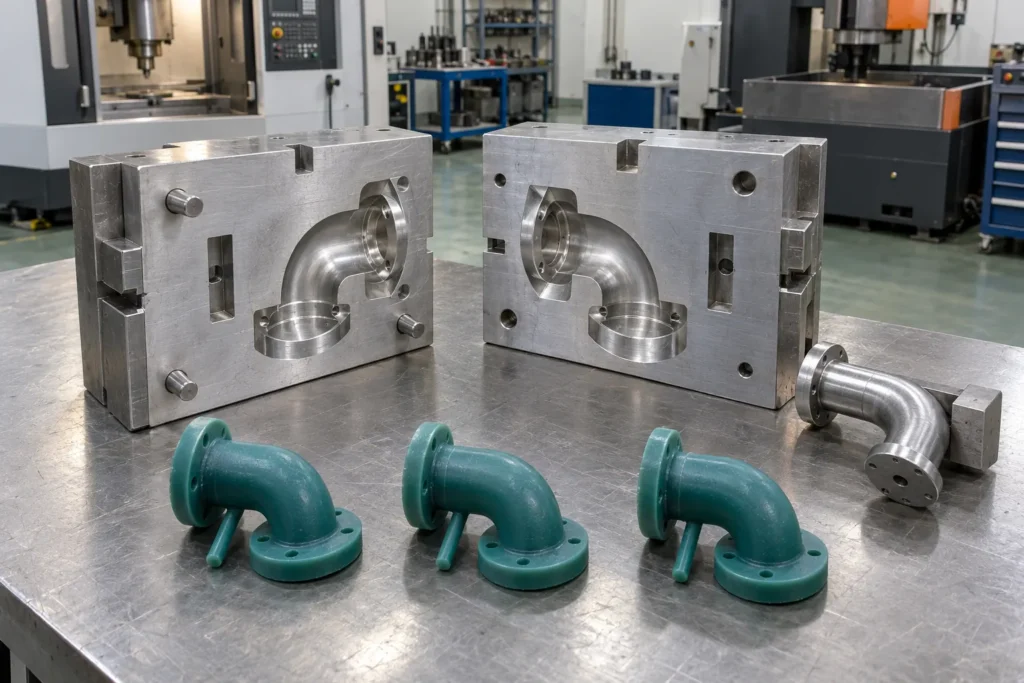
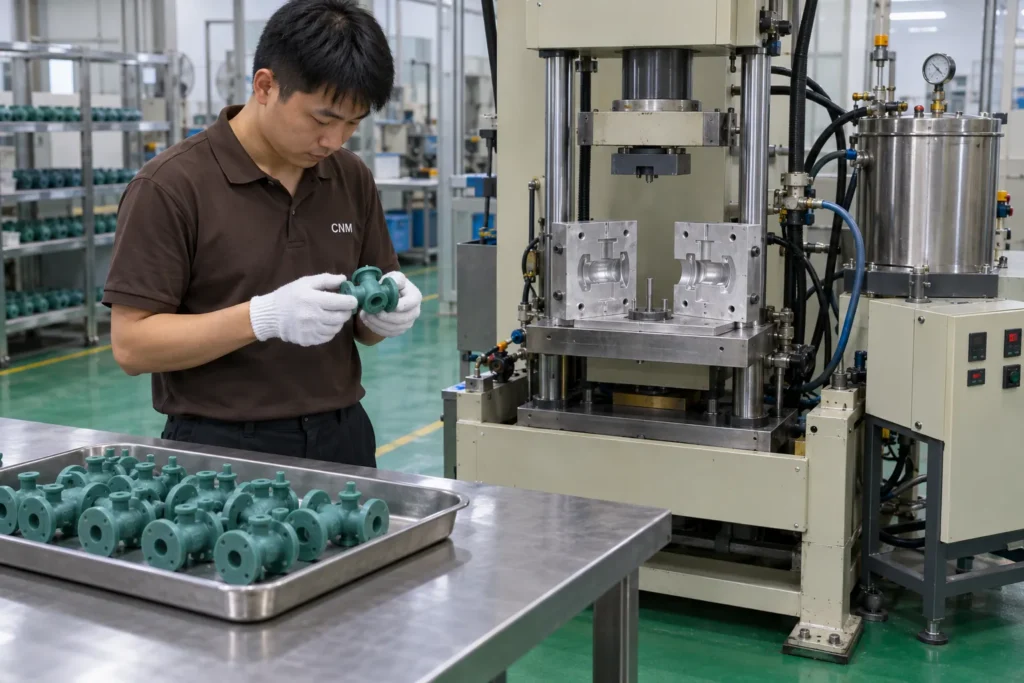
Every investment casting starts as a wax pattern, so the dimensions of the casting are set first by the wax die. We design and make wax pattern dies in our own tool room. The cavity is scaled for wax and metal shrinkage, typically about 1.5–2.5% for steel depending on alloy and geometry, and includes the parting line, gate position and any side cores.
Most dies are machined from aluminum, which is quick to machine and light to handle; steel inserts are used where wear is high. Internal passages that cannot be pulled are made with soluble wax cores or preformed ceramic cores. After first articles are measured, the cavity is corrected if needed before production.
What goes into a wax pattern die
Shrinkage allowance for wax and metal
Parting line and draft for clean pattern release
Side cores and loose pieces for undercuts
Soluble wax or ceramic cores for internal passages
Gate position agreed with the foundry
Multi-cavity dies for small parts in volume
Wax pattern dies at a glance (typical)
Die material
Aluminum for most dies; steel for long runs
Shrinkage
Wax and metal shrinkage built into the cavity
Features
Side actions, loose pieces, soluble or ceramic cores
Cavities
Single or multi-cavity, depending on part size and volume
Made by
Our own tool room
Wax pattern tooling FAQ
Who owns the wax pattern die?
Normally the customer who pays for the tooling owns it. Ownership, maintenance and storage terms are written into the quotation.
Can prototypes be made without a die?
Yes. 3D printed wax or resin patterns can be investment cast for prototypes and very small quantities before the die is made.
Have a casting in mind? Send us your drawing for a quotation.