Carbon and alloy steel
Heat-treatable carbon and alloy steel castings
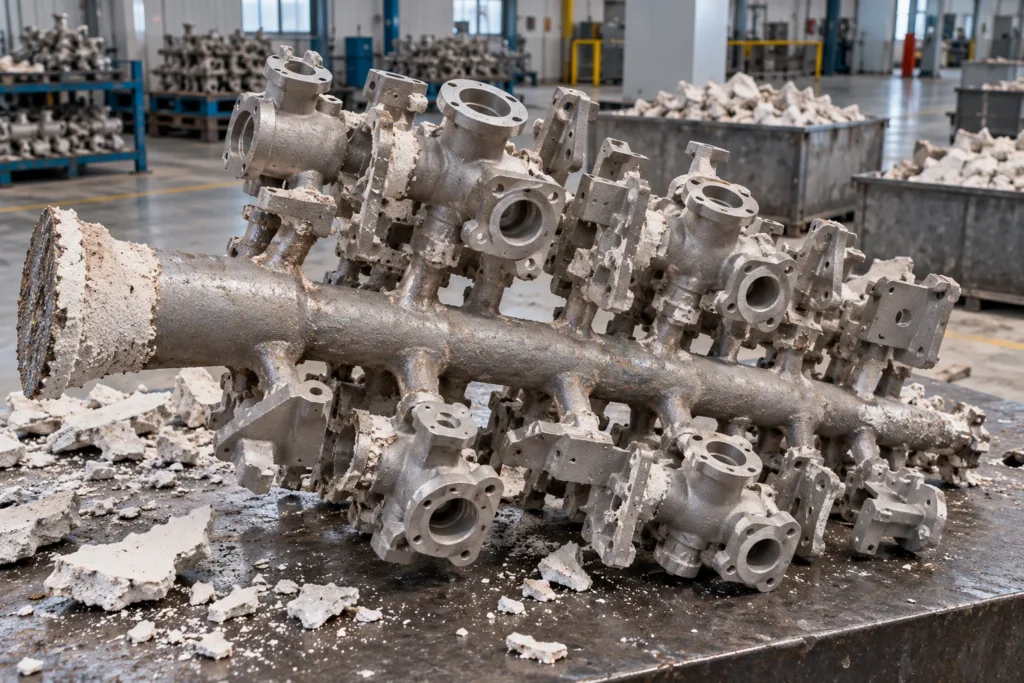
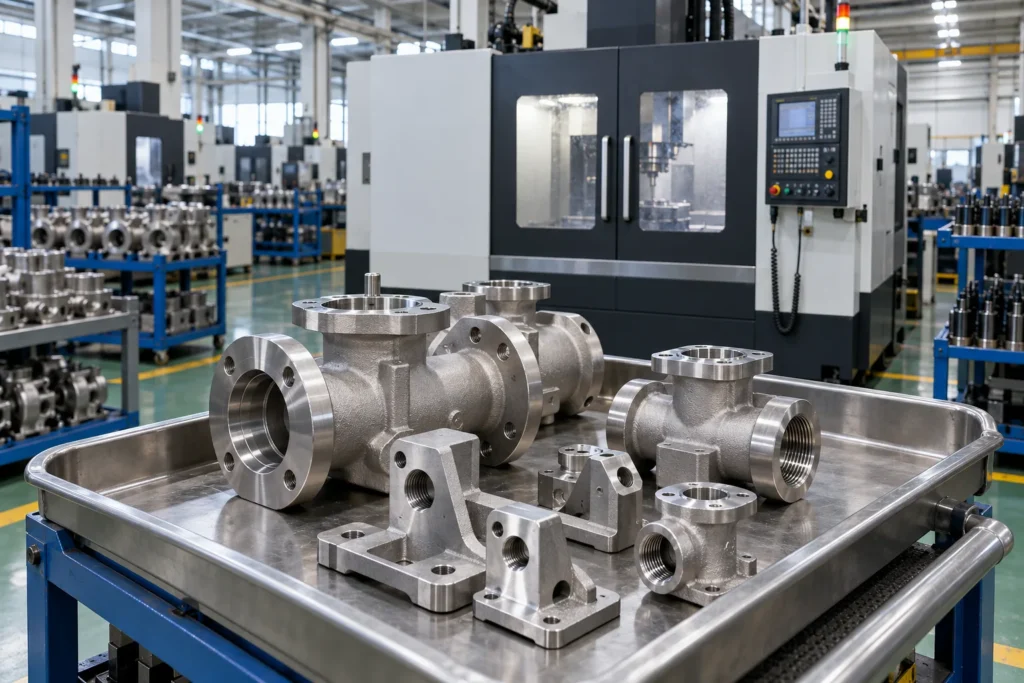
Carbon steels such as 1020, 1045 and WCB, and low-alloy steels such as 4130, 4140 and 8620, are cast where strength, toughness or wear resistance matter more than corrosion resistance. Final properties come from heat treatment: normalizing or annealing for most carbon steel parts, quench and temper for 4130 and 4140, carburizing for 8620 wear surfaces. Hardness or tensile values on the drawing are checked on test bars or on the parts.
Both shell routes are used. Water glass is common for larger parts machined on their functional faces; silica sol is used where the as-cast surface or tighter tolerances matter. Carbon steel parts need rust protection after machining, such as zinc plating, black oxide, paint or rust-preventive oil.
Typical carbon and alloy steel castings
- Levers, links, forks and brackets
- Gears, sprockets and cams
- Agricultural and construction machinery parts
- Automotive and truck components
- Tool and hardware parts
Carbon and alloy steel casting FAQ
Which heat treatments are used for steel castings?
Normalizing, annealing, quenching and tempering, and case hardening such as carburizing, depending on the grade and the required properties.
How are carbon steel castings protected from rust?
By plating (zinc, nickel), painting, powder coating, black oxide or rust-preventive oil, chosen for the operating environment.